

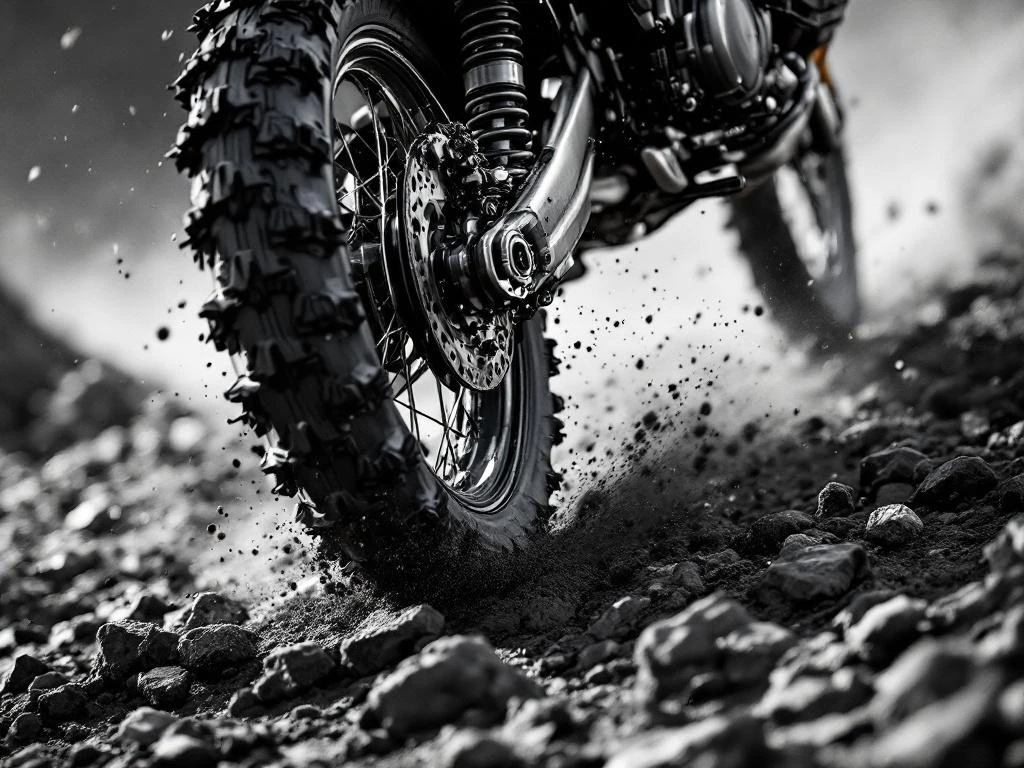
For most adventure bike riders, you need between 150mm and 220mm of suspension travel depending on your terrain and riding style. Gravel roads and light trails work fine with 120-150mm, whilst moderate off-road conditions perform best with 180-220mm. Extreme terrain and aggressive riding benefit from 220mm or more. Your bike’s weight, luggage load, and how hard you push all affect how much travel you actually need to ride comfortably and safely.
What does suspension travel actually mean for adventure bikes?
Suspension travel is the total distance your front forks or rear shock can compress from fully extended to fully compressed. On adventure bikes, you’ll typically see this measured in millimetres, with front travel ranging from 120mm to 250mm and rear travel from 100mm to 220mm depending on your bike’s design and intended use.
Think of suspension travel as the cushion between you and the ground. When your wheel hits a rock or drops into a rut, the suspension compresses to absorb that impact. More travel means your suspension can handle bigger obstacles before it runs out of movement and “bottoms out” against the internal stops.
Travel differs from suspension stroke, though people often confuse the two. Stroke refers specifically to the shock absorber’s internal movement, whilst travel measures the actual wheel movement. Because of leverage ratios in the linkage system, 50mm of shock stroke might create 150mm of rear wheel travel.
Why does this matter for off-road riding? Your suspension travel determines how much punishment your bike can absorb before harsh impacts transfer directly to you and the chassis. Adequate travel keeps your tyres in contact with the ground over rough terrain, which means better traction, control, and comfort. When you run out of travel, you lose all three.
How much suspension travel do you need for different types of terrain?
Gravel roads and maintained tracks work well with 120-150mm of travel. These surfaces have small irregularities but nothing that demands serious suspension movement. You’ll find this range on many road-biased adventure bikes that occasionally venture onto dirt roads.
Light trails with loose surfaces and moderate obstacles need 150-180mm of travel. This covers fire roads, forest tracks, and easy off-road routes where you encounter rocks, roots, and ruts but nothing too extreme. Most mid-sized adventure bikes sit in this range as a compromise between on-road handling and off-road capability.
Moderate off-road conditions like rocky trails, deeper ruts, and technical sections benefit from 180-220mm of travel. Here you’re dealing with obstacles that can seriously compress your suspension. Bikes in this category handle proper off-road adventures whilst still managing highway miles when needed.
Extreme terrain demands 220mm or more. Think rock gardens, jump landings, high-speed desert riding, and serious technical challenges. At this level, you’re riding an off-road focused machine that happens to have a number plate rather than an adventure bike that can handle some dirt.
The relationship between terrain roughness and travel needs isn’t linear. A 50mm increase in travel doesn’t just handle 50mm bigger rocks. It changes how the suspension behaves through its entire range, affecting everything from small bump compliance to big hit absorption. Your riding speed matters too. The faster you go, the harder impacts hit, and the more travel you need to manage them safely.
Does bike weight affect how much suspension travel you need?
Bike weight absolutely affects your suspension travel requirements, and heavier adventure bikes need more travel to perform properly. A 250kg adventure bike loaded with luggage and a rider compresses the suspension significantly more than a 150kg bike with the same setup, which means you’re using more of your available travel just sitting still.
When you add weight, your suspension sits deeper in its travel range before you even start riding. This is called sag, and it’s normal. But if your bike is heavy and your travel is limited, you might only have 60-70mm of usable travel remaining for bumps and impacts instead of the 100-120mm a lighter bike enjoys.
This is where spring rates become important. Heavier bikes need stiffer springs to support the weight without using excessive travel, but those springs must still allow enough movement to absorb terrain. More total travel gives you more room to balance these competing demands. You can run appropriate spring rates for the weight whilst still having adequate travel for off-road work.
Load changes everything too. Your adventure bike might handle beautifully with 180mm of travel when you’re riding solo on a weekend. Add 40kg of luggage and a passenger, and suddenly that same travel feels inadequate because you’re constantly deeper in the stroke. Many riders find they need bikes with 200mm+ travel not because the terrain demands it, but because their typical load does.
What’s the difference between too little and too much suspension travel?
Too little suspension travel shows up as harsh bottoming, where your suspension slams against its internal stops on moderate impacts. You’ll feel this as a sharp jolt through the bars or seat, often accompanied by a metallic clunk. When this happens regularly, you’re exceeding your suspension’s capability, which compromises control and damages components over time.
Insufficient travel also means you lose traction more often. Your tyre can’t follow the ground properly because the suspension runs out of movement, so the wheel skips and bounces rather than maintaining contact. You’ll notice this as vague steering, unexpected slides, and a general feeling that the bike is fighting you rather than working with you.
Too much travel creates different problems. Excessive travel often feels vague and disconnected, particularly on smoother surfaces where you don’t need all that movement. The bike can wallow through corners, and you lose the direct feedback that helps you read what the tyres are doing. It’s like riding on a mattress instead of a proper suspension.
Extra travel also adds weight and raises the bike’s centre of gravity, which affects handling even when you’re not using the full travel. Many riders who fit long-travel suspension for occasional extreme riding find they’ve compromised the bike’s behaviour for the 90% of riding that doesn’t need it.
The sweet spot sits where you rarely bottom harshly on your typical terrain, but the suspension still feels controlled and communicative. You’re using most of your travel on bigger hits without completely exhausting it. If you never use the last 30-40mm of travel, you probably have more than you need. If you’re bottoming several times per ride, you need more.
How does your riding style change what suspension travel you need?
Aggressive riders need more suspension travel than conservative riders on identical terrain. If you attack trails at speed, jump obstacles, and push hard through rough sections, you’re generating bigger suspension movements and higher impact forces. What feels like plenty of travel for a smooth rider becomes inadequate when you ride harder.
Your line choice makes a huge difference too. Conservative riders pick careful lines around obstacles, which reduces suspension demand. Aggressive riders often ride straight through rough sections, trusting their suspension to handle whatever comes. This approach needs more travel to work safely.
Speed amplifies everything. A rock that compresses 50mm of travel at 30km/h might use 120mm at 70km/h because the impact force increases dramatically. Faster riders need more travel simply because they hit everything harder, even if they’re on the same trail as slower riders.
Rider confidence affects travel needs in less obvious ways. Confident riders relax and let the bike move beneath them, which allows the suspension to work properly through its range. Tense, nervous riders often fight the bike, which prevents the suspension from using available travel effectively. Two riders with the same travel might have completely different experiences based on their riding confidence alone.
Jump frequency matters if you ride terrain with drops and launches. Landing impacts can easily use your entire travel range in a single hit. If jumping is part of your regular riding, you need enough travel to handle those landings without harsh bottoming, even if the rest of your riding would work with less.
How can custom suspension help you get the right travel for your riding?
Custom suspension optimisation helps you maximise whatever travel your bike has through proper setup and tuning. We often see riders struggling with their suspension not because they have the wrong amount of travel, but because their existing travel isn’t working properly. Correct spring rates, damping adjustments, and sag settings can transform how your bike uses its available travel.
Professional suspension setup considers your weight, riding style, typical terrain, and load conditions to configure everything properly. This means you’re using the full travel range effectively rather than wasting some of it through poor setup. Many riders find they don’t need more travel once their existing suspension is properly sorted.
When you genuinely need different travel amounts, custom solutions can often adapt your bike’s suspension to better match your requirements. We build suspension systems that deliver the right amount of travel for specific riding conditions, whether that’s increasing capability for serious off-road work or optimising existing travel for your particular needs.
At TFX Suspension, we specialise in creating suspension solutions matched to how you actually ride rather than offering generic setups. Our approach focuses on understanding your requirements and developing systems that perform properly for your adventure bike, terrain, and riding style. You can explore our range of suspension products designed for different adventure riding applications.
If you’re unsure what suspension travel you need or whether your current setup is working properly, we’re happy to discuss your specific situation. Get in touch with us and we’ll help you work out the right solution for your adventure bike and riding style. Proper suspension makes every ride better, regardless of how much travel you’re working with.
Frequently Asked Questions
Can I increase the suspension travel on my existing adventure bike?
In most cases, you cannot simply add more travel without significant modifications. Your bike’s frame geometry, swingarm length, and linkage design determine maximum travel limits. However, you can often optimise your existing travel through proper spring rates, damping adjustments, and professional setup to make better use of what you have. Some bikes allow fork cartridge upgrades that may add 10-20mm, but major travel increases typically require replacing the entire suspension system with components designed for your specific frame.
How do I know if I'm bottoming out too often?
Check your fork and shock for telltale signs: most modern suspension has an O-ring that slides down as the suspension compresses. After a typical ride, this O-ring should sit 10-20mm from full compression, meaning you’re using 80-90% of your travel on bigger hits. If the O-ring consistently reaches the end of the stroke, you’re bottoming out too frequently. You’ll also feel and hear harsh metallic clunks when bottoming occurs, which indicates you need either more travel, stiffer springs, or better damping control.
Should I adjust my suspension travel expectations when riding two-up with luggage?
Absolutely. Adding a passenger and luggage can add 80-120kg to your bike, which dramatically changes suspension requirements. You’ll need to increase preload and potentially upgrade springs to handle the extra weight, and you should expect to use more of your available travel. Many riders find that bikes with 180mm of travel feel adequate solo but need 200mm+ when fully loaded. Always re-adjust your sag settings when your load changes significantly, aiming for 30-35% sag with your typical touring load.
What's the best way to test if my current suspension travel is adequate?
Ride your typical terrain at your normal pace and pay attention to three key indicators: frequency of harsh bottoming (should be rare), traction consistency (tyres should stay planted), and overall comfort (impacts should feel controlled, not jarring). Use the O-ring method to check travel usage—you should be using 80-90% of available travel on the biggest hits you encounter regularly. If you’re consistently maxing out travel or experiencing harsh impacts multiple times per ride, you need either more travel or better suspension setup.
Does suspension travel affect my bike's handling on paved roads?
Yes, more suspension travel generally makes handling feel less precise on pavement. Long-travel suspension can feel vague in corners and less responsive to steering inputs because there’s more movement in the system. This is why road-focused adventure bikes use 120-150mm whilst off-road machines run 200mm+. The key is finding the right compromise for your riding split. If you spend 70% of your time on pavement, prioritise handling over maximum travel capability. If you’re mostly off-road, accept some on-road compromise for better dirt performance.
How often should I service my suspension, and does travel amount affect service intervals?
Most adventure bike suspension needs servicing every 15,000-25,000km or annually, whichever comes first. Bikes with longer travel and riders who use that travel aggressively should service more frequently—potentially every 10,000km—because the seals, bushings, and oil work harder. If you regularly ride hard off-road and bottom out frequently, consider servicing every 8,000-10,000km. Neglected suspension loses performance gradually, so you might not notice degradation until it’s properly serviced and you feel the dramatic improvement.
What's the minimum suspension travel needed for the Trans Euro Trail or similar adventure routes?
Most riders find 170-200mm of front travel and 160-180mm of rear travel works well for routes like the TET, which combines gravel roads, forest tracks, and moderate technical sections. You could manage with 150mm if you ride conservatively and choose careful lines, but having 180mm+ provides a comfortable margin for loaded touring and varying terrain difficulty. More important than maximum travel is having properly set up suspension with correct spring rates for your bike’s loaded weight, as most TET riders carry significant luggage for multi-day sections.
Configure Your Motorcycle Suspension
Find the correct TFX suspension setup for your motorcycle in less than 60 seconds.
Start Configuration