

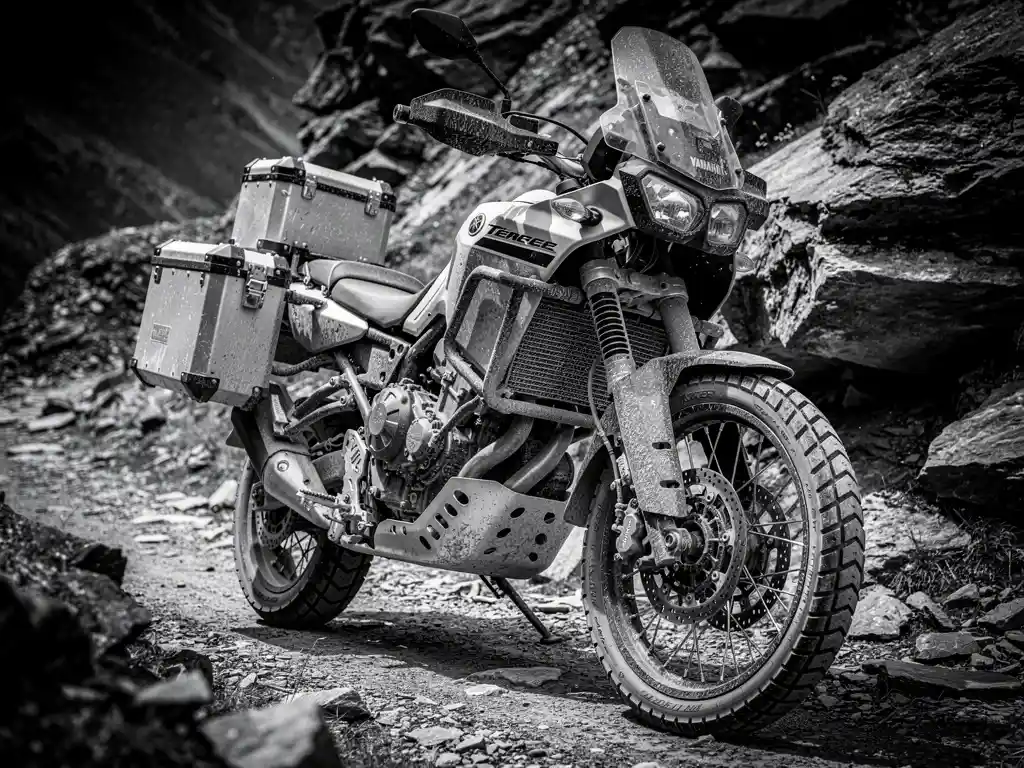
The Yamaha Ténéré 700 has earned its reputation as one of the most capable and versatile adventure bikes on the market. Whether you’re threading through mountain passes, grinding along gravel tracks, or covering long stretches of tarmac between destinations, the T7 delivers an impressive foundation. But the right accessories can transform a great bike into a perfectly tailored machine that matches your exact riding style, load requirements, and ambitions. Here is a practical guide to the upgrades that genuinely make a difference.
What accessories does the Yamaha Ténéré 700 need most?
The Yamaha Ténéré 700 benefits most from luggage systems, suspension upgrades, engine and skid plate protection, and comfort-focused additions like seat upgrades and handguards. These four categories address the bike’s real-world limitations straight from the factory and have the biggest impact on safety, reliability, and enjoyment across mixed terrain.
The T7 is built around a philosophy of simplicity and capability, which means the factory specification leaves room for meaningful personalisation. Unlike heavily specced touring bikes, the Ténéré 700 motor is deliberately lean, giving riders a blank canvas. The accessories that matter most are those that close the gap between what the stock bike offers and what serious adventure riding actually demands.
- Luggage: Carrying capacity for multi-day tours
- Suspension: Handling varied terrain and load changes
- Protection: Engine, radiator, and hand protection against trail damage
- Comfort: Seat padding, grips, and wind protection for long days in the saddle
Prioritising these areas ensures that every ride, short or extended, stays controlled, comfortable, and enjoyable.
What luggage systems work best on the Ténéré 700?
Soft panniers, hard case systems mounted on steel racks, and a quality tank bag work best on the Ténéré 700. Soft luggage suits off-road-focused riders because it absorbs impacts and keeps the centre of gravity lower, while hard cases offer better security and weather protection for touring-oriented setups.
The T7’s frame geometry and subframe design are well-suited to pannier racks from brands that build specifically for this model. A properly fitted rack keeps the load centred and avoids the pendulum effect that poorly positioned luggage creates at speed or on loose surfaces.
Soft versus hard luggage on the T7
Soft luggage is lighter and more forgiving when the bike goes down, which happens more frequently off-road. Hard cases protect gear better in rain and provide a lockable storage solution, making them popular for overlanding and urban stops. Many T7 riders run a hybrid setup: soft roll bags for trail days and hard panniers for extended touring.
A tank bag adds accessible storage for navigation devices, snacks, and documents without affecting the bike’s handling balance. Look for a magnetic or strap-mounted option that does not interfere with the T7’s fuel cap or instrument cluster.
How does stock suspension affect Ténéré 700 performance?
The stock suspension on the Yamaha Ténéré 700 is a competent but compromised setup that performs adequately for average riders at moderate speeds on mixed terrain. It lacks meaningful adjustability, struggles under heavier loads, and tends to feel underdamped at higher speeds or on technical trails, reducing rider confidence and control.
Yamaha designed the factory suspension to work across a wide range of riders and conditions, which inevitably means it is optimised for none of them perfectly. The front forks offer basic preload adjustment, and the rear shock has limited damping range. For lighter riders on smooth roads, this is manageable. For anyone pushing the bike harder, carrying luggage, or riding with a passenger, the stock setup begins to show its limitations.
Common stock suspension complaints on the T7
- Excessive dive under hard braking on the front forks
- Wallowing or bottoming out on the rear shock when loaded
- Vague feedback on loose or unpredictable surfaces
- One-size-fits-all spring rates that rarely match individual rider weight
These issues are not failures of the bike but rather the natural consequence of mass-market engineering. Understanding them helps you make informed decisions about when and how to upgrade.
When should you upgrade the Ténéré 700 suspension?
You should upgrade the Ténéré 700 suspension when the stock setup no longer matches your riding demands, specifically when you regularly carry heavy luggage, ride with a passenger, tackle technical off-road terrain, or feel that the bike’s handling is holding back your confidence and control. Most serious adventure riders reach this point within the first season.
The clearest signal is when the bike feels unpredictable rather than planted. If the front end washes out under braking, the rear bounces over rough ground, or the bike sits noticeably lower under load, the stock suspension is working beyond its intended range. These are not just comfort issues; they are safety concerns on demanding terrain.
Rider weight and load as key factors
Spring rate is the most critical element to get right. Factory springs are typically calibrated for a rider of average weight without luggage. If you are lighter or heavier than that baseline, or if you regularly tour with full panniers, the spring rate mismatch means the suspension is either too stiff or too soft before you even begin adjusting damping. A custom-sprung aftermarket shock and fork upgrade addresses this at the source rather than trying to compensate with clickers.
For adventure riders planning extended tours, upgrading before a major trip rather than after a problem occurs is always the smarter approach. Suspension failures in remote locations are costly and inconvenient in ways that a planned upgrade never is.
What protection accessories are essential for the Ténéré 700?
The essential protection accessories for the Yamaha Ténéré 700 are a skid plate, handguards, radiator guards, and frame sliders. These four items protect the most vulnerable components during off-road riding and low-speed drops, which are a normal part of adventure and dual-sport riding.
The T7’s engine cases, radiator, and levers are exposed in the stock configuration. A quality aluminium or steel skid plate shields the engine and exhaust header from rocks and ground strikes. Radiator guards prevent stone damage to the cooling fins, which can cause slow leaks that go unnoticed until the engine overheats.
Handguards and lever protection
Handguards serve a dual purpose: they protect the levers and controls from trail debris and branches, and they reduce hand fatigue from wind blast on longer rides. Bar-end mounted guards offer better protection than clamp-on versions. For serious off-road use, full wrap-around guards are preferable to open-ended designs.
Frame sliders and engine case covers are worth adding if you plan to ride technical terrain where tip-overs are likely. The T7’s popularity means there is a wide aftermarket selection available, and fitting these items early avoids the frustration of repairing damage that could have been prevented.
Which comfort upgrades make the biggest difference on long rides?
The comfort upgrades that make the biggest difference on long Ténéré 700 rides are an aftermarket seat, heated grips or grip warmers, a taller or adjustable windscreen, and bar risers. Together, these changes reduce fatigue significantly and allow you to ride longer with better focus and less physical strain.
The stock seat on the T7 is serviceable for shorter rides but becomes uncomfortable over several hours. Aftermarket options with higher-density foam and ergonomic contouring extend the comfortable riding window considerably. Some riders opt for a gel insert added to the existing seat as a cost-effective first step.
Ergonomics and riding position
Bar risers bring the handlebar closer and higher, reducing the forward lean that causes shoulder and wrist fatigue on long days. Even a small adjustment of 20 to 30 millimetres can make a noticeable difference over a full day of riding. Combined with comfort grips or heated grips in colder climates, the cockpit becomes a far more pleasant place to spend time.
A windscreen upgrade is particularly valuable for motorway sections. The stock screen on the Ténéré 700 provides limited wind protection at highway speeds, and buffeting becomes tiring quickly. An adjustable or taller screen deflects airflow more effectively without creating turbulence at helmet level, which is a common problem with poorly designed aftermarket screens.
How TFX Suspension Helps You Get the Most from Your Ténéré 700
When the stock suspension is the limiting factor on your Yamaha Ténéré 700, a custom-built replacement makes a measurable difference in every ride. At TFX Suspension, we design and manufacture suspension systems specifically matched to the individual rider, not the average one. Our approach is built around the principle that no two riders have the same weight, style, or terrain preferences, and your suspension should reflect that.
Here is what we offer for Ténéré 700 riders:
- Custom-sprung rear shocks from our Traveler, Freelexer, and Xtreme series, each tuned for your specific weight and riding demands
- Fork revalving and spring upgrades to eliminate dive and improve front-end feedback on mixed terrain
- Load-specific tuning for riders who regularly tour with luggage or a passenger
- Full service and rebuild support to keep your suspension performing at its best over time
We do not offer generic off-the-shelf solutions. Every system we build is configured for the person riding it. Whether you are planning a long-distance overland route or pushing harder on technical trails, the right suspension setup makes the difference between managing the bike and truly riding it.
Explore our suspension products for adventure bikes, learn more about our maintenance and custom tuning services, or get in touch with our team to discuss the right setup for your Ténéré 700. You can also visit our blog for more in-depth riding and setup guides, or head to the TFX Suspension homepage to see the full range of what we build.
Frequently Asked Questions
How much should I budget for a full accessory setup on my Ténéré 700?
A practical full accessory build covering luggage, protection, comfort, and suspension typically ranges from £1,500 to £4,000+ depending on the quality tier and whether you include a custom suspension upgrade. Protection essentials like a skid plate, handguards, and radiator guards can be covered for £300–£600, while a quality aftermarket seat and windscreen add another £200–£500. Custom suspension is often the single largest investment but also the one that delivers the most noticeable improvement in real-world riding performance.
What are the most common mistakes T7 riders make when accessorising their bike?
The most common mistake is prioritising aesthetics over function — buying accessories that look good on social media but add unnecessary weight or compromise the bike’s handling balance. Another frequent error is fitting luggage racks or hard cases without first upgrading the suspension to compensate for the added load, which accelerates the stock setup’s limitations. Starting with protection and suspension before cosmetic upgrades ensures the bike performs safely before it looks the part.
Can I fit accessories myself, or do I need a professional mechanic?
Most bolt-on accessories — including skid plates, handguards, radiator guards, bar risers, and luggage racks — are designed for home installation with basic tools and are well within the ability of a mechanically confident rider. Suspension upgrades, particularly fork revalving and spring replacement, require more specialist knowledge and tools, and are best handled by an experienced suspension technician to ensure correct setup and safety. If in doubt, fitting a suspension upgrade professionally also gives you the opportunity to discuss ride-specific tuning directly with the builder.
How do I know which suspension spring rate is right for my weight and riding style?
Spring rate selection is based on your total system weight — your body weight plus full riding gear, luggage, and any passenger — combined with how aggressively you ride and the terrain you cover most often. A good suspension specialist will ask for these details before recommending a spring rate, rather than relying on generic weight brackets. At TFX Suspension, this rider-specific approach is central to how every system is configured, ensuring the spring rate is correct before any damping adjustments are made.
Will upgrading the suspension void my Yamaha warranty?
Fitting aftermarket suspension components does not automatically void your entire Yamaha warranty, but it can affect warranty claims directly related to the suspension system or any components demonstrably damaged by the modification. In most markets, consumer protection legislation means a manufacturer must prove the aftermarket part caused the fault before denying a claim. It is worth checking your specific warranty terms and speaking to your dealer before making changes if your bike is still within the warranty period.
What is the best first upgrade if I can only do one thing to my T7 right now?
If budget or time allows only one upgrade, prioritise the area that most directly affects safety and control for your specific riding — which for most adventure riders is suspension. A correctly sprung rear shock transforms how the bike handles under load and on rough terrain, and its benefits carry over to every ride regardless of conditions. If you are primarily a road or light gravel rider, an aftermarket seat is the upgrade that delivers the most immediate improvement to comfort and daily enjoyment.
How often does aftermarket adventure bike suspension need to be serviced?
Quality aftermarket suspension should typically be serviced every 15,000–20,000 kilometres or once a year for riders who cover mixed terrain regularly, whichever comes first. Hard off-road use, particularly in dusty or wet conditions, accelerates seal and fluid wear and may warrant more frequent checks. Regular servicing maintains the performance characteristics the suspension was originally built to, and catching seal wear early prevents more expensive internal damage down the line — TFX Suspension offers full rebuild and service support for this reason.
Configure Your Motorcycle Suspension
Find the correct TFX suspension setup for your motorcycle in less than 60 seconds.
Start ConfigurationRelated Articles
- Why does the CFMOTO 450 MT suspension bottom out with panniers and camping gear?
- How does the Yamaha Ténéré 700 dual sport bike handle a fully loaded soft luggage setup?
- How does CFMOTO Ibex 450 suspension compare to other dual sport bikes?
- How do you install luggage racks on CFMOTO 450 MT?
- What is suspension travel on adventure bikes?
