

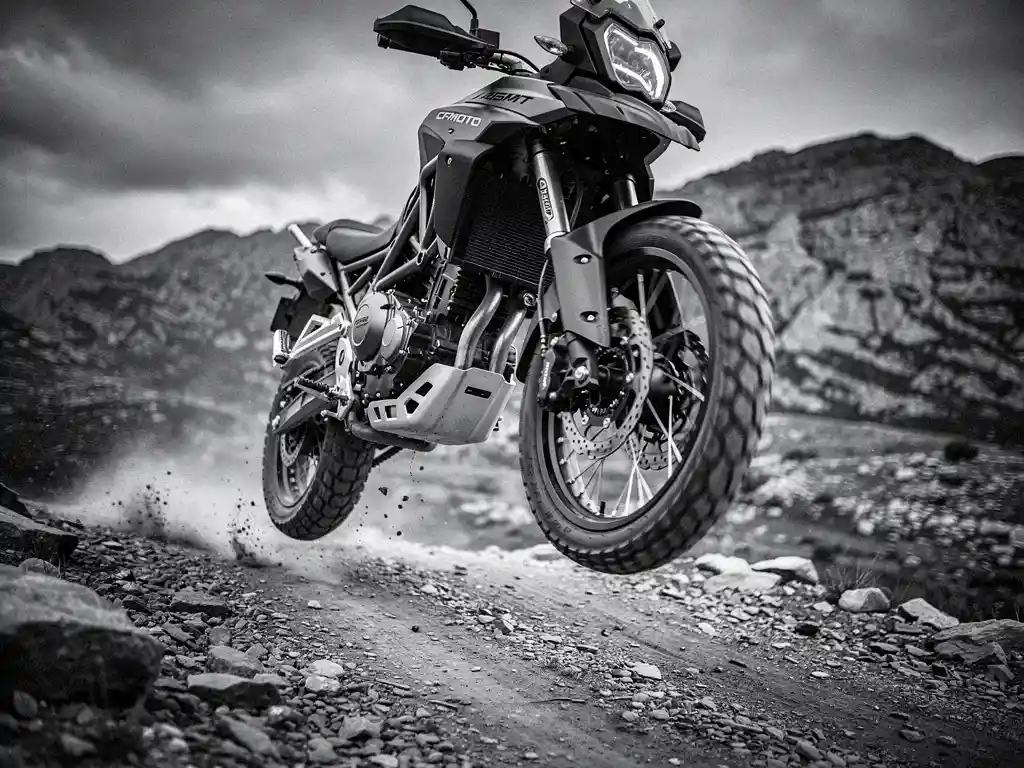
The single biggest suspension upgrade on the CFMOTO 450 MT off-road bike is the rear shock. Replacing the stock rear unit with a quality aftermarket shock delivers immediate, noticeable improvements in control, comfort, and stability across mixed terrain. That said, pairing a rear upgrade with a front fork service or respring compounds the gains significantly, especially for loaded adventure riding.
The CFMOTO 450 MT, also known as the CFMOTO Ibex 450, has earned genuine praise as an accessible dual sport and adventure motorcycle. Its chassis is capable, its parallel-twin engine is punchy for its class, and its price point is hard to argue with. But like most factory bikes in this segment, the stock suspension is built to a budget, and that becomes obvious the moment you push it off the beaten path. The sections below break down exactly where the weaknesses lie, which upgrades matter most, and how to approach the decision the right way.
What are the biggest suspension weaknesses of the CFMOTO 450 MT stock setup?
The CFMOTO 450 MT stock suspension suffers from two primary weaknesses: a rear shock that runs out of damping range quickly under load or rough terrain, and front forks that are tuned conservatively for road comfort rather than off-road control. Both units are functional for casual mixed use but fall short when the riding gets technical or the load increases.
Starting at the rear, the factory shock on the Ibex 450 uses a basic spring and damping setup that works adequately on smooth gravel or light trails. Push it into rocky tracks, deep ruts, or fast off-road sections, and the damping becomes inconsistent. The shock can feel harsh over sharp hits but then vague and unsupportive through longer compressions. This combination makes the rear end feel unpredictable, which directly affects your confidence when picking lines.
The front forks share a similar story. The spring rate is set for a lighter, more road-biased rider, which means they dive noticeably under braking and compress too easily over repeated bumps. On a dual sport adventure motorcycle used for touring with luggage, this becomes a real handling issue rather than just a comfort complaint.
Two additional weaknesses worth noting:
- Limited adjustability: The stock setup offers minimal tuning options, so there is no easy way to compensate for changes in rider weight, passenger load, or luggage.
- Fade over long distances: On extended adventure rides, the damping performance of the stock units degrades as heat builds up, leading to a noticeably worse ride in the second half of a long day.
Which suspension component makes the most impact off road — front or rear?
On the CFMOTO 450 MT adventure bike, the rear shock makes the most impact off road. The rear suspension carries the majority of the bike’s dynamic load during acceleration, cornering, and rough terrain absorption. Upgrading it first delivers the most immediate and measurable improvement in off-road handling and stability.
This is a common point of debate among adventure and dual sport riders, but the reasoning is straightforward. When you are riding off road, the rear wheel is constantly working to maintain traction over loose, uneven surfaces. A shock that cannot control rebound properly causes the rear to bounce and skip, breaking traction at exactly the moment you need it most. A quality aftermarket rear shock with proper spring rate and damping control transforms how the CFMOTO Ibex 450 adventure motorcycle behaves on technical terrain.
The front forks are important too, particularly for braking stability and steering precision. However, the front end on the 450 MT responds well to relatively simple interventions like a respring with the correct-weight oil and a heavier spring rate. These are lower-cost improvements that can close much of the gap without a full fork replacement.
A practical approach for most riders is to prioritize the rear shock as a complete aftermarket unit, then address the front forks through a service and respring. This sequence gives you the best performance gain per euro spent and is the route most experienced adventure riders take when upgrading a CFMOTO 450 MT setup for serious off-road use.
What should you look for in an aftermarket shock for the CFMOTO 450 MT?
When choosing an aftermarket shock for the CFMOTO 450 MT, look for a unit with adjustable spring preload, independent compression and rebound damping adjustment, and a spring rate matched to your actual riding weight and load. These three features give you the control that the stock shock simply cannot provide.
Here is what each of those features means in practice:
- Adjustable spring preload: This lets you set the correct sag for your weight, which is the foundation of any suspension setup. Without it, the shock is never in its optimal working range.
- Compression damping adjustment: Controls how quickly the shock compresses over a hit. Too fast and the bike bottoms out; too slow and it feels harsh. Being able to tune this for different terrain types is genuinely useful on a dual sport adventure bike.
- Rebound damping adjustment: Controls how quickly the shock returns after compression. Poor rebound is one of the main reasons stock shocks feel unpredictable off road, as the rear wheel bounces rather than tracking the ground.
Beyond adjustability, pay attention to build quality and serviceability. A shock that cannot be rebuilt is a shock you will eventually have to replace entirely. For a motorcycle used on long adventure tours, serviceability is not a luxury, it is a practical necessity. Also confirm that the replacement unit is built to the correct eye-to-eye length and uses the appropriate mounting hardware for the CFMOTO Ibex 450 motorcycle specifically, as fitment varies between model years.
How does a custom-tuned suspension differ from an off-the-shelf upgrade?
A custom-tuned suspension is built and set up around your specific weight, riding style, and intended use, whereas an off-the-shelf upgrade uses a standardized specification that fits a broad range of riders. The difference shows up most clearly at the extremes: loaded adventure touring, technical off-road terrain, or riding with a passenger.
An off-the-shelf aftermarket shock for the CFMOTO 450 MT adventure motorcycle is a meaningful improvement over stock. It uses better materials, more consistent damping, and often includes adjustment features the original lacks. For a rider of average weight doing moderate mixed-terrain riding, it can be entirely sufficient.
Custom tuning goes further by treating the suspension as a system matched to you rather than to a demographic average. This involves:
- Selecting a spring rate calculated from your total riding weight including gear and luggage
- Setting damping curves that suit your riding pace and preferred terrain type
- Configuring the front and rear to work together rather than independently
- Adjusting the setup as your riding evolves or your use case changes
For adventure riders using the CFMOTO 450 MT dual sport bike on demanding multi-day trips, the investment in custom tuning pays back in reduced fatigue, better control under load, and a bike that genuinely responds to your inputs rather than fighting them. The gap between a well-tuned custom setup and a generic upgrade becomes especially clear when you are 300 kilometres into a rough trail with full luggage.
When is the right time to upgrade the CFMOTO 450 MT suspension?
The right time to upgrade the CFMOTO 450 MT suspension is when the stock setup is actively limiting your riding, either through poor control on rough terrain, excessive dive under braking, or instability under load. You do not need to wait for a component to fail. If the suspension is holding back your confidence or comfort, that is reason enough.
There are several clear signals that the moment has arrived:
- The rear end feels bouncy or unsettled on gravel and broken surfaces
- The front forks bottom out under moderate braking with luggage fitted
- You are riding with a passenger or heavy bags and the handling feels sluggish or vague
- You have upgraded your riding to more technical off-road trails and the bike no longer keeps up
- You notice the ride quality deteriorating over the course of a long day in the saddle
For riders who bought the CFMOTO Ibex 450 as their first adventure motorcycle, a common approach is to ride the stock setup for an initial season to develop a feel for the bike’s behavior, then upgrade once you have a clear sense of what is missing. This makes the upgrade decision informed rather than speculative.
If you are planning a demanding tour or a specific off-road event in 2026, build in enough lead time for a custom setup. A properly specced and tuned suspension needs a brief settling period and ideally a short test ride before a major trip.
How TFX Suspension Helps With Your CFMOTO 450 MT Upgrade
We specialize in exactly this kind of upgrade. At TFX Suspension, we build high-performance, fully serviceable suspension systems matched to your specific riding weight, style, and terrain. For CFMOTO 450 MT riders, that means no generic off-the-shelf guesswork, but a setup that genuinely fits the way you ride.
Here is what we offer for the CFMOTO 450 MT and CFMOTO Ibex 450:
- Custom-spec rear shocks with correct spring rates, independent compression and rebound adjustment, and full rebuild serviceability
- Front fork services and resprings tailored to your weight and riding conditions
- Complete suspension packages for adventure riders who want front and rear working as a matched system
- Ongoing tuning support so your setup evolves as your riding does
We follow a simple philosophy: do not settle for standard. If you are ready to find out what the right suspension can do for your CFMOTO adventure motorcycle, find your vehicle to get started, browse our CFMOTO suspension range, or visit our shop to explore the full product lineup. You can also learn more about our approach at tfxsuspension.com.
Frequently Asked Questions
How do I measure the correct spring rate for my CFMOTO 450 MT rear shock?
The correct spring rate is calculated from your total system weight — that means your body weight plus riding gear, helmet, boots, and any luggage you typically carry. A good starting point is to aim for around 30% sag on the rear shock, measured with you seated in your normal riding position. Most aftermarket shock suppliers, including TFX, will calculate the appropriate spring rate for you if you provide your total riding weight, so it is worth having that figure ready before you order.
Can I install an aftermarket rear shock on the CFMOTO 450 MT myself, or do I need a professional?
Swapping the rear shock is a manageable job for a mechanically confident rider with basic workshop tools — it typically involves removing the subframe bolts, supporting the swingarm, and unbolting the two shock mounting points. That said, setting sag and dialling in the damping adjustments correctly afterwards is where most riders benefit from professional guidance, at least the first time. Getting the setup wrong after fitting a quality shock is a common mistake that leaves performance gains on the table.
Will upgrading the suspension on my CFMOTO 450 MT affect its warranty?
In most markets, fitting aftermarket suspension components does not automatically void your entire motorcycle warranty, but it can affect warranty claims directly related to the suspension system or components influenced by it. It is worth checking your specific dealer agreement and local consumer protection rules before proceeding. Using a reputable, properly engineered aftermarket unit rather than a low-cost generic part also reduces the risk of any dispute if a warranty issue arises elsewhere on the bike.
How often does an aftermarket shock on the CFMOTO 450 MT need to be serviced?
A quality, fully serviceable aftermarket shock should be inspected and serviced roughly every 15,000 to 20,000 kilometres, or annually for riders who cover mixed terrain regularly. Adventure and off-road use accelerates wear on the seals and damping fluid, so riders who spend significant time on rough tracks should lean toward the shorter service interval. Keeping up with servicing is what separates a long-lasting performance upgrade from one that degrades back toward stock-level performance within a couple of seasons.
What is the difference between preload adjustment and a spring rate change — and which one do I actually need?
Preload adjustment changes the initial compression of the spring to set the correct sag for your weight, but it does not change how stiff the spring feels through its travel. A spring rate change physically replaces the spring with one that is stiffer or softer, altering how the suspension responds across its full range of movement. If you are significantly heavier or lighter than the average rider the stock spring was designed for, preload adjustment alone will not fix the problem — you need the correct spring rate first, and then preload to fine-tune the sag.
I mostly ride on-road with occasional light gravel — is a suspension upgrade still worth it on the CFMOTO 450 MT?
Yes, but the priority and specification shift. For predominantly road and light gravel use, the biggest gains come from correctly matched spring rates and a front fork respring rather than a full off-road-spec rear shock. The stock setup on the 450 MT tends to be too soft for heavier riders even on tarmac, causing dive under braking and a wallowing feel through fast bends. A modest, road-biased upgrade can make the bike feel significantly more planted and predictable without going full adventure-spec.
Are there any common mistakes riders make when upgrading the CFMOTO 450 MT suspension for the first time?
The most common mistake is buying a shock based on price or brand recognition alone without specifying the correct spring rate for their actual weight — this results in a better-quality unit that is still set up wrong. A close second is upgrading only one end of the bike without considering how it interacts with the other: fitting a significantly stiffer rear shock without addressing the front forks can shift the handling imbalance rather than resolve it. Taking the time to specify both ends together, even if you upgrade them in stages, gives you a far more cohesive result.
Configure Your Motorcycle Suspension
Find the correct TFX suspension setup for your motorcycle in less than 60 seconds.
Start Configuration