

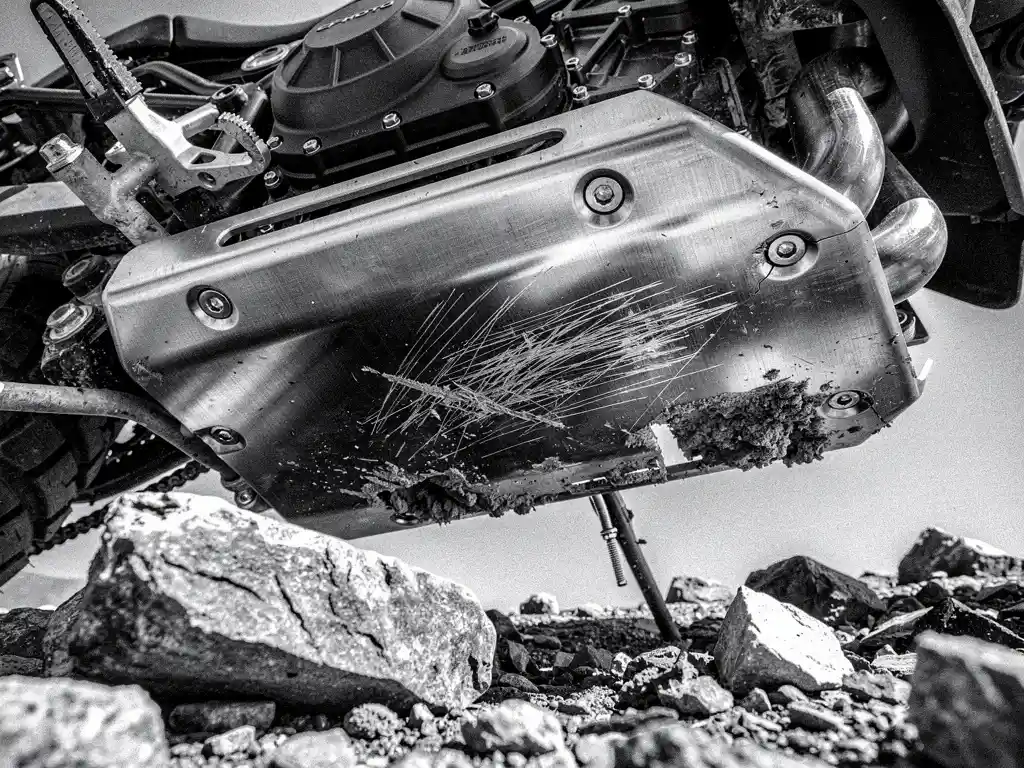
If you’re riding a CFMoto 800 MT on mixed terrain, protecting the underside of your bike is one of the smartest investments you can make. Rocks, roots, gravel, and rough trail surfaces can cause serious damage to the engine, frame, and other critical components beneath your bike. A quality skid plate is one of the first upgrades most adventure riders add, and for good reason. This guide answers the most common questions about skid plates for the CFMoto 800 MT so you can make a confident, informed choice.
What is a skid plate and why does the CFMoto 800 MT need one?
A skid plate is a protective shield mounted beneath a motorcycle to guard the engine, exhaust headers, frame rails, and other vulnerable components from impact damage caused by rocks, debris, and rough terrain. For the CFMoto 800 MT specifically, a skid plate is essential because the bike’s adventure-oriented design takes it into environments where underside impacts are a real and frequent risk.
The CFMoto 800 MT is built for dual-sport and adventure riding, which means it regularly encounters the kind of terrain where a single sharp rock or unexpected ledge can crack an engine casing or damage an oil pan. Factory protection on most mid-range adventure bikes is minimal at best, and the 800 MT is no exception. The stock plastic undertray offers very limited coverage and virtually no meaningful impact resistance.
Beyond preventing costly mechanical damage, a skid plate also gives riders greater confidence off-road. Knowing your engine is protected means you can push into more technical sections without hesitation. For long-distance adventure riders who are far from the nearest workshop, that peace of mind is genuinely valuable.
What skid plates are compatible with the CFMoto 800 MT?
Several aftermarket manufacturers produce skid plates specifically designed for the CFMoto 800 MT, with options in both aluminium and high-density plastic. The most commonly recommended brands include Outback Motortek, Touratech, and various regional aftermarket suppliers who have developed fitment-specific designs for the 800 MT platform.
When shopping for a compatible skid plate, look for products that explicitly list the CFMoto 800 MT as a fitment. The 800 MT shares some design elements with the 800 MT Explorer variant, but mounting points and coverage areas can differ, so always confirm compatibility before purchasing. Key things to check include:
- Year of manufacture: The 800 MT has received updates since its release, so confirm the plate is designed for your specific model year.
- Coverage area: Some plates cover only the engine, while others extend to protect the exhaust headers and frame rails.
- Mounting system: Look for plates that use existing frame bolts rather than requiring drilling or modification.
- Weight rating: A heavier plate offers more protection but adds unsprung weight, which can affect handling.
Outback Motortek in particular has built a strong reputation for CFMoto-specific protection gear, and their 800 MT skid plate uses a bolt-on design that requires no permanent modification to the frame. Touratech also offers aluminium options with a focus on durability for extended expedition use.
What’s the difference between aluminium and plastic skid plates?
The key difference between aluminium and plastic skid plates is impact resistance versus weight. Aluminium plates absorb and deflect hard impacts far more effectively than plastic, making them the preferred choice for serious off-road use. Plastic plates are lighter and cheaper, but they crack under significant impact rather than bending or deflecting the blow.
Aluminium skid plates
Aluminium skid plates, typically made from 4mm to 6mm aircraft-grade aluminium, are the gold standard for adventure and enduro riding. They can take repeated rock strikes without failing, and even when dented, they continue to provide protection. They are heavier than plastic alternatives, usually adding between 1.5kg and 3kg to the bike, but for riders tackling serious off-road terrain, this trade-off is well worth it. Aluminium plates can also often be straightened and reused after a significant impact.
Plastic (HDPE) skid plates
High-density polyethylene (HDPE) plastic plates are a practical option for riders who spend most of their time on gravel roads and light trails rather than technical rocky terrain. They are significantly lighter than aluminium, they do not corrode, and they are generally less expensive. However, a hard impact on a sharp rock can crack or shatter a plastic plate, potentially leaving your engine exposed at the worst possible moment. For purely road-oriented riding with occasional light gravel, plastic is acceptable. For genuine off-road adventure use, aluminium is the safer long-term investment.
How do you install a skid plate on the CFMoto 800 MT?
Installing a skid plate on the CFMoto 800 MT is a straightforward process that most mechanically confident riders can complete using basic hand tools. The process involves removing the stock undertray, positioning the new skid plate, and securing it using the manufacturer’s supplied hardware at the designated mounting points.
Here is a general step-by-step process for a bolt-on aftermarket skid plate:
- Remove the stock undertray: Locate and remove the factory plastic undertray using the appropriate screwdrivers or Allen keys. Keep all original hardware in case you need to reinstall it later.
- Clean the mounting area: Wipe down the frame rails and mounting points to ensure a clean, flush fit for the new plate.
- Dry fit the skid plate: Hold the skid plate in position and confirm all mounting holes align correctly with the frame before inserting any bolts.
- Insert and hand-tighten all bolts: Start all bolts by hand to avoid cross-threading, then work through them in a cross pattern.
- Torque to specification: Use a torque wrench and follow the manufacturer’s torque specifications. Over-tightening can strip threads or crack mounting tabs.
- Check clearance: With the plate installed, check that there is no contact with the exhaust or moving components during suspension travel.
Always refer to the specific installation instructions provided with your skid plate, as mounting configurations vary between manufacturers. If you are unsure about any step, having the installation done by a qualified motorcycle technician is a sensible choice.
Should I choose an OEM or aftermarket skid plate for the CFMoto 800 MT?
For the CFMoto 800 MT, an aftermarket skid plate is generally the better choice over OEM options. CFMoto’s factory protection is minimal and not designed for serious off-road use, while the aftermarket offers purpose-built solutions with significantly better coverage, materials, and impact resistance at competitive price points.
OEM accessories from CFMoto tend to prioritise aesthetics and light trail use rather than genuine protection for demanding terrain. They are also typically made from plastic rather than aluminium, which limits their effectiveness in rocky or technical environments.
Aftermarket manufacturers who specialize in adventure bike protection have invested in developing products that address exactly the weaknesses of factory protection. The advantages of going aftermarket include:
- Greater material choice, including heavy-gauge aluminium
- Wider coverage of vulnerable components, including headers and frame rails
- Better long-term value due to durability and repairability
- Community-tested fitment with documented installation experiences
The one scenario where OEM makes sense is if you primarily ride on paved or lightly graded roads and want a tidy, factory-matched appearance without the added weight of an aluminium plate.
What else can I do to protect the underside of my CFMoto 800 MT?
Beyond a skid plate, there are several additional protective measures worth considering for the underside and lower bodywork of the CFMoto 800 MT. A skid plate covers the engine and frame, but other components remain exposed without supplementary protection.
Consider adding the following:
- Frame guards: Protect the lower frame tubes from rock strikes and abrasion, particularly important on technical off-road sections.
- Radiator guards: Shield the radiator from stone damage, which can cause coolant leaks and overheating in remote locations.
- Exhaust header wrap or guard: Reduces heat and protects the headers from contact damage on tight trails.
- Handguards: While not underside protection, handguards prevent lever damage and protect your hands on off-road sections.
- Suspension upgrades: Improved suspension helps your bike absorb impacts more effectively, reducing the stress transmitted to the frame and engine in the first place.
It is also worth developing good riding habits as a form of protection. Reading terrain ahead, choosing lines that avoid sharp rocks, and maintaining appropriate speed for conditions all reduce the frequency and severity of underside impacts significantly.
How TFX Suspension helps protect and improve your CFMoto 800 MT
While a skid plate protects your bike from the outside, your suspension system determines how well your CFMoto 800 MT handles the terrain beneath it. Better suspension means fewer hard bottoming events, less stress on the frame, and a more controlled ride that naturally reduces the risk of underside damage. That is where we come in.
At TFX Suspension, we specialise in high-performance, fully custom suspension systems built around your specific riding style, body weight, and the terrain you actually ride. For CFMoto 800 MT owners, we offer:
- Custom-tuned shock absorbers that replace factory units with precisely calibrated alternatives for your weight and riding conditions
- Suspension servicing and rebuilds to restore or exceed the original performance of your existing components
- Expert setup advice tailored to adventure and dual-sport riding demands, including mixed-terrain and loaded touring use
- Ongoing support and fine-tuning so your suspension continues to perform as your riding evolves
We believe in the philosophy of not settling for standard, and that applies just as much to how your bike rides as to how it is protected. Explore our suspension products, find out more about our service and tuning options, or get in touch with us directly to discuss what your CFMoto 800 MT needs. You can also visit the TFX blog for more guides and insights, or head to the TFX Suspension homepage to learn more about who we are and what we build.
Frequently Asked Questions
How do I know if my skid plate is still providing adequate protection after a hard impact?
After any significant impact, remove the skid plate and inspect both the plate and the components beneath it for cracks, deep gouges, or deformation. An aluminium plate that has been dented but not cracked or torn can often still be used or straightened by a metal fabricator, but if the plate has bent inward enough to contact the engine casing or exhaust, it needs to be replaced immediately. Also check that all mounting hardware is still tight and that no mounting tabs have cracked, as a loosely secured plate offers significantly reduced protection.
Will adding a skid plate affect the ground clearance of my CFMoto 800 MT?
A well-designed, fitment-specific skid plate should not meaningfully reduce your ground clearance, as quality aftermarket options are engineered to sit flush within the existing profile of the bike’s underside. In some cases, a skid plate can actually improve effective clearance by replacing sharp or protruding factory components with a smooth, deflecting surface that guides the bike over obstacles rather than catching on them. Always check the manufacturer’s specifications for installed height to confirm there is no significant clearance reduction for your intended terrain.
How often should I inspect and maintain my skid plate?
A quick visual inspection after every off-road ride is a good habit, checking for new cracks, loose bolts, or visible deformation. A more thorough inspection, including removing the plate to check the mounting points and the components beneath it, is recommended every few thousand kilometres or at the start and end of any major adventure trip. For aluminium plates, periodically check that the mounting hardware has not worked loose due to vibration, and apply a small amount of thread-locking compound to bolts if you find them backing out repeatedly.
Can I fit a skid plate myself if I have no prior motorcycle modification experience?
Yes, most bolt-on skid plates designed for the CFMoto 800 MT are genuinely beginner-friendly, requiring only basic hand tools such as Allen keys, a socket set, and ideally a torque wrench. The most important steps are confirming the dry fit before tightening any bolts, following the torque specifications to avoid stripping threads, and double-checking clearance around the exhaust once the plate is installed. If you are uncertain at any point, a qualified motorcycle workshop can complete the installation quickly and inexpensively, and watching it done once makes future installs straightforward.
Does fitting a skid plate have any impact on my CFMoto 800 MT's warranty?
Fitting a bolt-on skid plate that uses existing mounting points and requires no drilling or permanent modification should not void your CFMoto warranty, as no irreversible changes are made to the motorcycle. However, warranty terms vary by region and dealer, so it is worth confirming with your local CFMoto dealer before fitting any aftermarket accessory. If damage to a covered component could be argued to have been caused or contributed to by an aftermarket part, a manufacturer may contest a warranty claim, so keeping a record of your installation and using reputable, fitment-specific products is always a sensible precaution.
What is the best skid plate option for someone who tours with a fully loaded CFMoto 800 MT?
For fully loaded touring, a heavy-gauge aluminium plate in the 4mm to 6mm range from a specialist adventure manufacturer such as Outback Motortek or Touratech is the strongest recommendation, as the added weight of luggage increases the force of any underside impact. Look for a plate that extends coverage to the exhaust headers and frame rails, not just the engine sump, since loaded bikes sit lower and expose more of the underside to terrain contact. Pairing the skid plate with a suspension setup properly tuned for your loaded weight will also significantly reduce the severity and frequency of hard bottoming events on rough roads.
Are there any common mistakes riders make when choosing or fitting a skid plate for the CFMoto 800 MT?
The most common mistake is choosing a universal or non-fitment-specific plate to save money, which often results in poor alignment, incomplete coverage of critical components, and mounting solutions that require drilling or compromise the frame. Another frequent error is under-torquing the mounting bolts, which allows the plate to shift and rattle under vibration, gradually wearing the mounting tabs and reducing protection. Finally, many riders forget to check exhaust clearance after installation, which can lead to heat damage to the plate or, in rare cases, contact with moving suspension components during full compression.
Configure Your Motorcycle Suspension
Find the correct TFX suspension setup for your motorcycle in less than 60 seconds.
Start ConfigurationRelated Articles
- Hoe bouw ik één betrouwbare veringssetup voor woon-werkverkeer, soloritten en volledig beladen expedities?
- Is CFMOTO 450 MT suitable for commuting?
- How do you adjust CFMOTO 450 MT suspension settings?
- What is suspension sag on adventure motors?
- What are the best adventure motor tires for different conditions?
