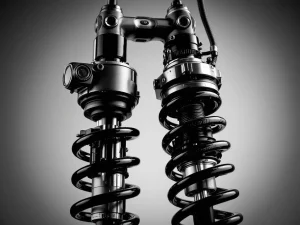
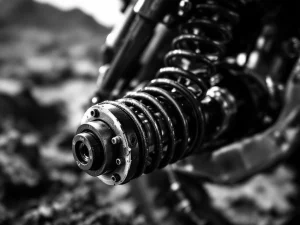
Progressive springs revolutionize adventure motorcycle suspension by offering variable resistance that adapts automatically to changing conditions. They compress softly over minor bumps for comfort, then firm up progressively for larger impacts to prevent bottoming out. This dual-nature design delivers a plush ride on smooth roads while maintaining control on challenging terrain. Whether you’re riding solo or fully loaded with gear, progressive springs adjust naturally without requiring spring swaps, reducing rider fatigue on long tours while keeping your bike balanced and responsive across varied adventure riding scenarios.
Mixing different fork oil weights in your adventure bike might seem like a practical solution when you’re stuck without the correct specification, but it creates unpredictable damping behaviour that affects handling and safety. While petroleum-based fork oils will technically blend together, the resulting viscosity becomes unknown, making proper suspension tuning impossible. Different manufacturers use varying additive packages that behave differently under temperature changes, and without standardised oil ratings, your homemade blend could perform inconsistently across varied terrain. Discover why choosing the correct fork oil weight matters for adventure riding.
Proper rebound damping adjustment transforms your adventure bike’s off-road performance. This comprehensive guide walks you through identifying when your suspension needs adjustment, the step-by-step process for dialing in rebound settings, and terrain-specific recommendations. Learn to recognize the signs of too-fast or too-slow rebound, use practical trail tests, and understand how different conditions demand different settings. Whether you’re battling rocky technical sections or flowing through fast gravel roads, mastering rebound damping keeps your tires planted and your bike controlled.
Mixing different fork oil weights creates unpredictable suspension behavior on your adventure motor. While combining 5W and 10W oils might seem like a clever tuning trick or emergency fix, incompatible additives can cause inconsistent damping, excessive foaming, and accelerated wear. The only acceptable scenario is a genuine emergency in remote locations—and even then, it’s strictly temporary. Your manufacturer’s specifications exist for good reason: extensive testing has optimized performance, reliability, and safety. Proper fork service means completely draining old oil and refilling with fresh, single-weight oil at precise levels.
Fork oil weight dramatically changes how your adventure bike handles everything from small bumps to hard braking. Heavier oil (15W-20W) provides firmer damping for aggressive riding and heavy loads, while lighter oil (5W-7.5W) delivers superior comfort and traction on technical terrain. Most adventure bikes use 10W as a balanced starting point, but the right choice depends on your riding style, climate, and the terrain you tackle most often. Understanding viscosity helps you dial in suspension performance for confidence-inspiring handling.
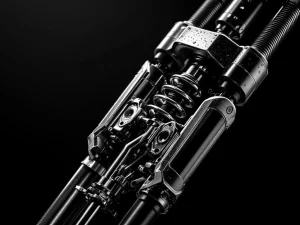
Cartridge forks use sealed damping units inside each fork leg to deliver superior suspension control for adventure bikes. Unlike conventional forks that mix damping and lubricating oil, cartridge systems keep everything separate for consistent performance across varied terrain. They handle heat better during long rides, maintain damping characteristics when loaded with luggage, and offer more adjustment options. Learn how cartridge forks work, why they benefit adventure riding, and whether upgrading makes sense for your bike.
Piggyback reservoirs mount directly to your shock body for compact installation, while remote reservoirs connect via hose for flexible placement. Both add oil capacity to prevent suspension fade during demanding rides, but differ in packaging and fitment. The choice depends on your bike’s clearances, luggage setup, and installation preferences. Most riders won’t notice performance differences between types—the real upgrade comes from having any reservoir at all. Understanding these configurations helps you choose suspension that fits your adventure bike properly and performs consistently on long, technical rides.
Incorrect preload silently destroys adventure bike suspension through constant seal compression or repeated bottoming out. Too much preload stresses seals and bushings while limiting travel; too little causes hard impacts that damage internal components and bend shock shafts. Your bike warns you through clunking noises, oil leaks, and unpredictable handling. Proper sag measurement—typically 30-40% of travel—protects your investment and ensures safe handling across varying terrain and loads.
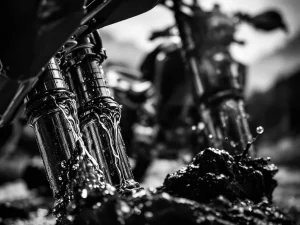
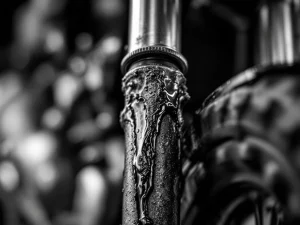
Worn adventure bike suspension seals reveal themselves through oil leaking around fork tubes, visible dirt buildup, reduced damping performance, and unusual compression noises. Oil residue typically appears first, followed by inconsistent suspension feel and performance changes. Adventure bikes face harsher conditions than street bikes—dust, mud, and constant off-road movement accelerate seal wear dramatically. Minor seepage shows as a thin film, while serious failure produces oil that reappears quickly after cleaning. Regular visual checks every 2,000-3,000 kilometres help catch seal wear early, preventing expensive internal damage and maintaining safe, predictable suspension performance.
Carrying a passenger on your adventure motor requires proper suspension adjustment to maintain safety and performance. Most riders need to add 3-5mm of rear preload to compensate for the additional 60-80kg weight, restoring optimal ride height and handling. Without adjustment, you’ll face reduced ground clearance, frequent bottoming out, and compromised handling. This guide explains what preload does, how much to adjust based on passenger weight, and the physical adjustment methods for different suspension systems. Discover why rear-only adjustment usually suffices and when front preload tweaks help balance your bike for confident two-up riding.